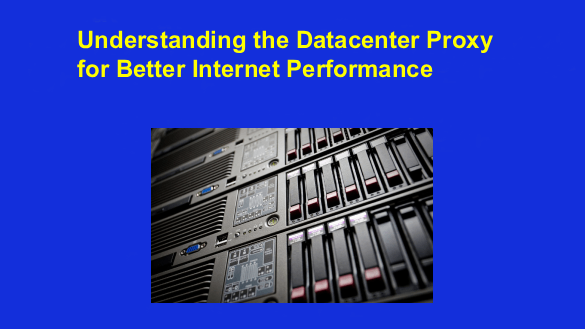
 A datacenter proxy acts as a fast intermediary using IP addresses that businesses, rather than ISPs, own between your computer and the internet. These tools run on massive servers, bringing incredible bandwidth and very quick response times to the users. Website owners categorize these IPs as being from a professional data center because they aren’t residential.
What are the implications for your everyday web surfing or business tasks? On one hand, they deliver power. On the other hand, their non-residential nature makes them traceable and blockable by security systems. This is the compromise in technical testing – the speed is usually accompanied by the lack of stealth.
Why It Outperforms Other Options
Speed is the primary reason why users prefer these tools to the residential or mobile alternatives. Most datacenter proxy servers are connected to the internet via 1 Gbps or 10 Gbps lines that serve their purpose perfectly in terms of heavy throughput. The percentage of automated systems and bots that generate about half of the total internet traffic is constantly growing. Such systems need high-speed proxy networks so that they can work without experiencing any significant lag or connection timeouts. But speed alone is not sufficient if the target website regards your IP range as suspicious.
In case you use residential IPs, you might experience slower connections since they depend on home internet connections. On the contrary, a data center proxy allows a steady flow since it avoids local infrastructure limitations. And, because these IPs come in large quantities, ISPs can charge a very low price for them. You can learn more about securing your personal home network to see how different connection types impact your privacy. The fast connection remains possible but with the highest risk of being denied access.
Finding the Right Datacenter Proxy Provider
When selecting a provider, you have to consider their IP pool size and different subnets. A website can easily block an entire group of IPs with one click if the provider has a small IP range. The most trustworthy services provide both SOCKS5 and HTTP proxies so that different kinds of web traffic and security protocols can be handled at the same time. It is a good idea to find out if the provider offers proxy rotation to automatically change your IP at specified time intervals.
The price of the services in this sector is very clear and understandable, which is a plus for the more expensive alternatives. You can often buy private proxy sets for as little as $0.90 to $1.50 per IP. Some ISPs have bulk discounts that bring the price to cents when you buy thousands of proxy IP addresses at once. At the same time, it might be a good idea to check if the service provides 24/7 support when things go wrong, as it is hard to resist the allure of cheap prices.
|
|
DC |
Residential |
|
Speed |
1 Gbps – 10 Gbps |
10 Mbps – 100 Mbps |
|
Cost |
$0.50 – $2.00 per IP |
$3.00 – $15.00 per GB |
|
Anonymity |
Medium |
High |
|
Detection Risk |
High |
Low |
|
Availability |
High / Instant |
Variable |
Shared vs Dedicated Proxies for Daily Tasks
The decision to go for shared or dedicated options is purely your budget and reliability requirements.
The shared IPs are less pricey since they are used by different people all at once, which normally results in “bad neighbor” effects. You can be banned from a specific site if another user who shares the same IP gets it banned. On the other hand, dedicated or private datacenter proxies allow you full control over the IP for the period of your subscription. This exclusivity helps with IP masking and online anonymity because your browsing activities do not get mixed up with others’.
And what about the technical setup? Most people use these services through browser extensions or custom software scripts made for the purpose of automation. If you have several social media accounts, using a dedicated datacenter proxy for each one decreases the likelihood of getting all accounts banned together. However, if your need is nothing more than bypassing a simple geo-restriction, a shared pool is the way to go, as it would save a little money. Just be ready for the slowdowns or “access denied” messages that come with the cheaper, shared options every now and then.
The Role of Web Scraping Proxies in Research
Researchers use DC proxies to collect huge amounts of information from the web without the risk of their main IP getting blacklisted. These are the industry standard for non-sensitive targets due to speed being a key factor for scraping millions of pages. The number of requests datacenter IPs can handle per second is 5-10 times more than that of residential ones, making them ideal for price monitoring, SEO ranking tracking, or market trend analysis.
However, sites with stronger bot protection, such as Amazon or LinkedIn, identify a datacenter IP in no time. They examine certain headers and IP ownership records that clearly indicate “I am a server in a warehouse.” The use of anonymous proxy services comes to the rescue at this point since they are able to mask the actual nature of the traffic. One has to weigh the high-speed benefits against the likelihood of facing a CAPTCHA or a strict block.
Final Thoughts on Using a Datacenter Proxy
Every DC option has its respective benefits for those who place quickness and low costs above complete stealth. They support everything from market research to sneaker bots and gaming optimizations. When speed is a primary concern, these remain your best options in the market today. Just be aware of the risk of detection and pick a provider with a broad IP range to minimize the risks. The proper use of these tools not only keeps you productive but also protects your personal IP from prying eyes.