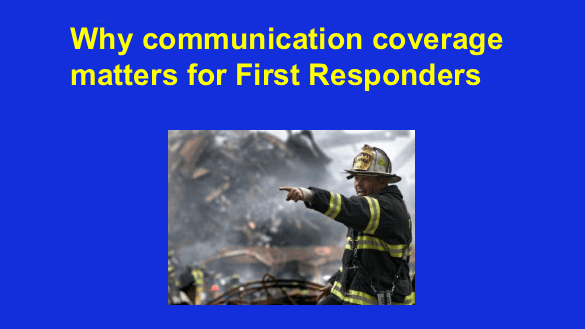
Ever lost cell signal in a stairwell or an underground garage and instantly felt cut off?
Now picture a firefighter mid-rescue in that same stairwell, trying to reach their team. Or a paramedic deep inside a crowded stadium, unable to transmit a patient update. When lives are on the line, communication isn’t a bonus—it’s the spine of the entire operation.
In this post, we will discuss why reliable signal coverage is essential to how first responders function and why infrastructure can’t afford to lag behind the demands of their work.
Signal Doesn’t Follow You Into Emergencies
When emergencies happen, first responders go where no one else is willing—or able—to go. But these are the very spaces where signal tends to disappear. Stairwells, basements, elevators, reinforced buildings, parking structures, and massive public venues consistently show weak or dead zones. These are the blind spots where vital updates get dropped, location pings get scrambled, and commands go unheard.
The issue isn’t new, but it’s more urgent than ever. Emergencies don’t wait for a strong signal. Neither should the people trained to handle them. That’s why modern infrastructure upgrades are being driven by coverage-first thinking. And for organizations designing or upgrading these systems, RFE Communications stands out as a provider that understands the high stakes. Their distributed antenna systems are built to cover the overlooked spaces—delivering seamless connectivity across every carrier, every device, and every level of the building. They don’t just install hardware. They craft signal plans designed for real-world, high-pressure use.
Reliable signal turns chaos into coordination. It allows police, fire, and EMS to communicate across floors, access building plans on the fly, transmit video, and receive updates from command posts—without lag, silence, or interference. The ability to stay connected transforms outcomes.
Communication Is Command
Emergency response relies on speed, but more importantly, it relies on clarity. Every second counts, but those seconds only move the needle when they’re backed by informed decisions. When responders can’t reach each other or receive delayed intel, errors pile up. And in many cases, they never get a second chance to correct them.
The shift toward cloud-based systems, digital radios, GPS integration, and mobile dispatch tools has made connectivity non-negotiable. First responders aren’t just using walkie-talkies. They’re sending encrypted messages, pulling blueprints, syncing location data, and issuing mass notifications to multi-agency teams. Without uninterrupted coverage, these tools fall flat.
High-profile events over the past few years—hurricanes, building collapses, mass casualty incidents—have highlighted exactly where communication infrastructure breaks down. And they’ve also made it clear that when signal holds up, response time shortens, confusion drops, and results improve.
Built-In Coverage, Not Band-Aids
Too many facilities treat signal coverage as an afterthought. They install surface-level solutions, hoping carrier signals from outside will bleed through thick walls and concrete cores. But first responders don’t have the luxury of standing near a window or running back outside to send a message. The coverage must be built in—not patched on.
This is especially important in new construction and renovations. Materials like low-E glass, steel framing, and insulation layers, while energy-efficient, block signal. Add in layered building codes, deep infrastructure, and growing reliance on smart systems, and you have a recipe for dropouts where you least want them.
What’s needed is forward planning: dedicated communication zones, signal testing during buildout, integration of DAS during the design phase, and routine audits to ensure ongoing coverage. These aren’t extras. They’re modern safety standards.
And the demand is growing beyond public safety. Hospitals, airports, arenas, and schools are recognizing that their responsibility to maintain signal isn’t just about convenience for guests—it’s about making sure the people who protect those spaces can actually do their jobs.
Pressure Doesn’t Pause for Signal
In the world of emergency response, the margin for error is already small. Add communication delays, and it evaporates. For first responders, that moment when they key their mic or tap their screen shouldn’t be a gamble. The signal should be there, the message should go through, and the operation should move forward.
Strong coverage isn’t about luxury. It’s about reducing friction where there’s already enough pressure. It’s about ensuring coordination between agencies that might be operating from different frequencies, different systems, and different departments. Signal bridges that gap. Without it, you get overlap, confusion, and delay.
The broader push toward smarter cities and public safety reform includes infrastructure like this—not because it’s trendy, but because it saves time, prevents loss, and supports people who are already risking enough. Communication is no longer just about radios. It’s about equipping first responders with a full tech stack—and then making sure that tech actually works where it matters.