 Want to get my easy to follow Tech Tips in your email?
Sign up for my daily Rick’s Tech Tips Newsletter!
Note: The links in this post are affiliate links.
The scammers of the world never seem to take a break, and unfortunately many of the scams making the rounds today are very easy to fall for.
There’s a very dangerous ‘cloud storage’ related email scam that’s making the rounds right now, and unfortunately lots of people are falling for it.
This scam plays upon your fear of losing access to your precious photos and other irreplaceable files. In a nutshell, the emails claim that your cloud storage plan will be terminated and all the files that are currently stored online will be deleted unless you immediately pay a renewal fee.
The poor folks who fall for these scams and respond to the emails typically end up having their identities stolen and their bank accounts drained. It’s really quite sad and infuriating.
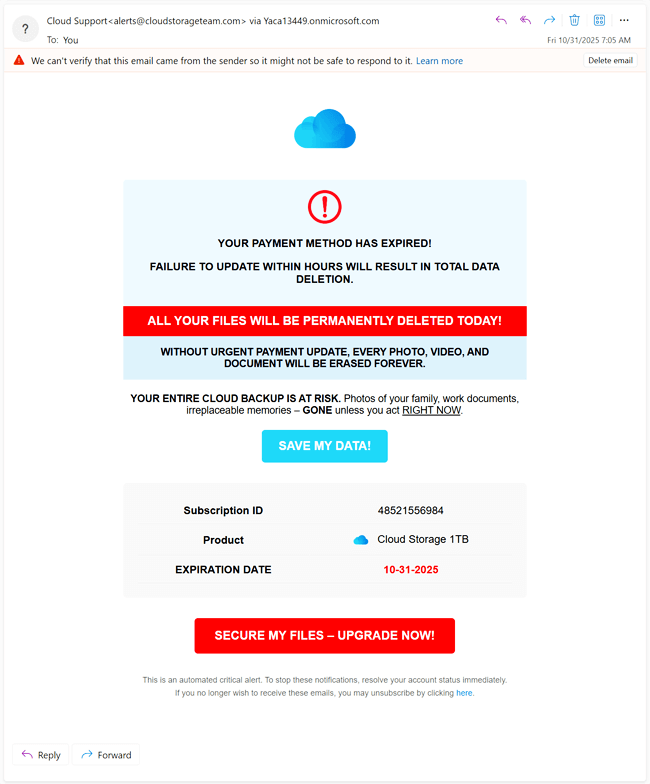
Here’s a screenshot of a typical scam email that I received just this morning:
Pretty scary stuff, right?
Well, there are several clues that make it obvious that the above email is a scam:
1 – There is no company name mentioned, just a somewhat vague mention of the term “cloud backup”. If this had actually been sent in regards to your iCloud, Google Drive, Dropbox or other legitimate account the company name and/or logo would have been prominently featured in the email.
2 – The sender’s email address doesn’t belong to any known cloud storage service. It’s just an address that indicates that the message was sent from a generic third-party website.
3 – The email gives a strict deadline of RIGHT NOW. Any cloud storage service that’s in common use would send at least one (and most likely several) email notices before threatening to immediately close your account and delete your files. This is the first email I received from “[email protected]”.
4 – The email never refers to me by my actual name, or even a username. The only reference to me is the word “Your”.
Here’s another example that actually displays the iCloud name and logo:
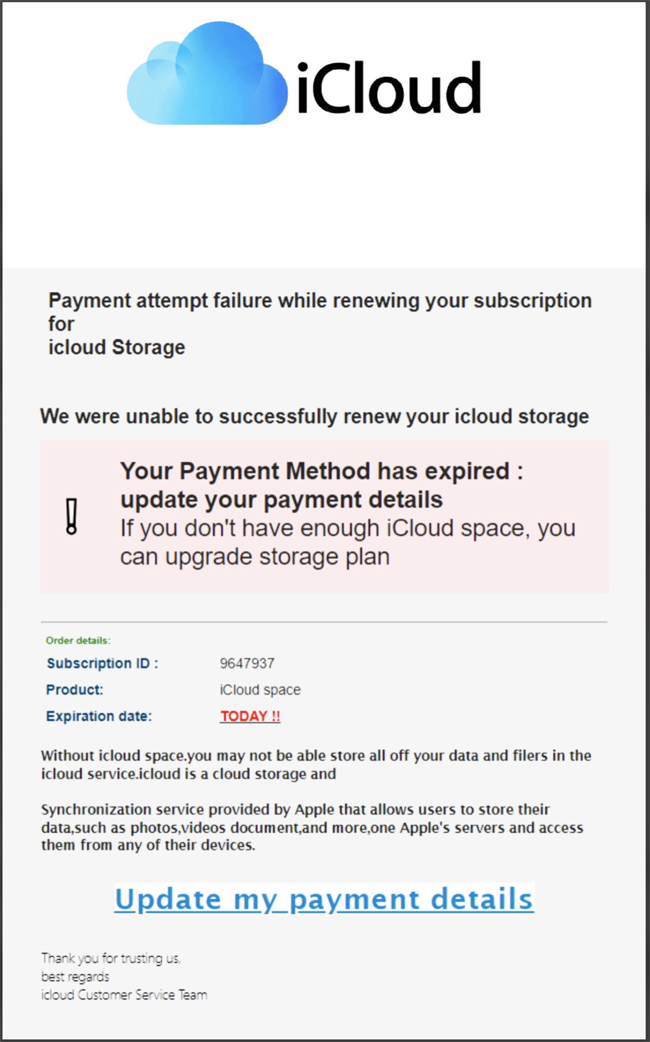
As you can see, these “warning” emails are obviously fake. But the thing is, some of the scam emails making the rounds can actually be quite convincing. Some of them are very realistic-looking AI generated messages that do include a company name and logo, and some of them even use the recipient’s actual proper name.
If you receive an email similar to the ones shown above and it appears that it could be real, here are a few things to check:
1 – Do you even have a storage account with that company? If you’re strictly an Android or Windows user, it’s highly unlikely that you would even have an iCloud account.
Likewise, if you’re an iPhone user and the email was supposedly sent from Google, there’s a good chance that you don’t even use Google Drive.
2 – Does the sender’s email address appear to be a real address that your cloud storage service would use? If not, you can rest assured that the email is fraudulent.
3 – Do the details about the plan listed in the email exactly match the service plan you have with the company?
For example, the plan referenced in the first email above is for 1TB of online storage space. If I had a plan that provided 5TB (or any amount other that 1TB) that would be a huge red flag.
4 – Does the email claim that your account AND your stored data will be deleted immediately if you fail to renew right away? This is another huge red flag, especially if this is the first email you have received concerning the need to renew.
Bottom line: While it’s very important to ensure that your precious photos and other important files are never lost, it’s equally important to protect your identity and your money from scammers. If you end up receiving one of these emails be sure to carefully check it out before responding to it in any way.
Better yet, ignore the email completely and sign into your account with your cloud storage provider directly, using a bookmark or URL that you know to be legitimate. If your account is truly overdue for renewal you will be alerted to that fact after you have signed in.
And finally, as handy and convenient as cloud storage can be, I strongly recommend that you never depend on it as your only storage medium. The key to having a truly safe backup/storage plan is redundancy, which means you also need to keep copies of your files locally (on an external hard drive, for example).
Bonus tip: Email scams are just one of the many ways scammers separate innocent victims from their money.
This excellent resource will give you the tools and information you need to remain safe online.