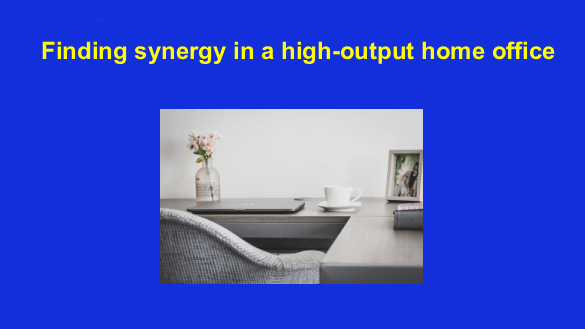
 In the modern freelance economy, your home office is no longer a secondary workspace; it is the command center of your professional life.
As a virtual assistant and writer navigating the complexities of 2026, I have learned that productivity is not merely a byproduct of discipline and software—it is deeply rooted in the physical infrastructure of our environment.
The transition from a “makeshift” setup to a professional-grade office is a milestone every freelancer must face. However, the most effective approach isn’t just about buying a better chair or a larger desk in isolation. It is about understanding the synergy between your tools.
This guide explores the strategic advantages of choosing integrated systems, the essential role of specialized support, and how to build a workspace that sustains your health and your business without a corporate-level budget.
The Power of Integrated Systems: Why Bundles Outperform Pieces
One of the most common pitfalls in home office design is the fragmented procurement of furniture. We often buy a desk because it fits a specific corner and a chair because it happens to be on sale. However, true ergonomics is a science of alignment. If your chair’s armrests don’t clear your desk’s underside, or if your desk height prevents you from achieving a 90-degree elbow angle, the “ergonomic” label on your individual items becomes meaningless.
That’s why the ergonomic table and chair bundle changes the game: buying these in sets guarantees complementary comforts. These sets are engineered as a singular ecosystem. When you purchase a bundle, you are acquiring a setup that has been pre-calibrated for mechanical compatibility.
The Professional Benefits of Bundling:
1 – Calibrated Posture: Bundles are designed so that the chair’s maximum and minimum seat heights align perfectly with the desk’s range, ensuring your “ergonomic triangle” (eyes to screen, elbows to keyboard, feet to floor) is always preserved.
2 – Financial Accessibility: For a self-employed professional, this allows you to secure a motorized standup desk and a high-spec chair for nearly the same price as a high-end chair alone.
3 – Efficiency in Setup: Dealing with one shipment, one set of assembly instructions, and one warranty provider saves a freelancer’s most valuable resource: time.
Advanced Spinal Support: The Architecture of the All-Day Chair
As professionals who may spend upward of 40 hours a week in a single seat, we must look beyond “padding” and toward “structure.” A standard chair provides cushion; a professional chair provides architecture.
The core requirement for any serious home office is office chairs with back support that specifically target the lumbar region. The human spine naturally curves inward at the lower back (the lordotic curve). Without consistent support, this curve tends to flatten as the day progresses, leading to slouching, compressed spinal discs, and the inevitable “tech neck.”
Essential Features for Professional Back Support:
1 – Dynamic Lumbar Adjustment: High-quality ergonomic chairs feature lumbar systems that can be adjusted for both height and depth. This allows you to position the support exactly where your spine needs it, regardless of your height.
2 – Synchronized Tilting: A professional chair shouldn’t lock you into a rigid 90-degree angle. It should allow for a “weightless” recline that keeps your feet on the floor while opening up the pelvis. This movement rehydrates spinal discs and prevents the stiffness often associated with deep-focus work.
3 – Thoracic Support: While lumbar is key, supporting the mid-to-upper back prevents the “rounded shoulders” that occur when we are leaning into our screens for intensive tasks like data entry or writing.
Breathability and Climate Control in the Tropical Workspace
For those of us working in Singapore or other humid climates, the material of your workspace is just as important as its shape. Traditional leather or thick fabric chairs often trap body heat, leading to thermal discomfort and a noticeable drop in focus during the afternoon hours.
This is why mesh work chairs have become the industry standard for high-performance home offices. The open-weave design of high-tension mesh allows for six times more airflow than solid back models. This capillary action keeps your body temperature regulated, preventing that “sticky” feeling that often triggers a midday energy slump.
Why Mesh is the Professional’s Choice:
- Adaptive Tension: Unlike foam, which eventually compresses and loses its shape, premium mesh acts like a hammock. It contours to your unique body shape and redistributes your weight every time you shift positions.
- Low Maintenance: Mesh is resistant to spills and odors, making it ideal for a home environment where you might be drinking coffee or snacking at your desk. A simple wipe-down is often all that’s required to maintain its professional appearance.
- Modern Aesthetic: Mesh chairs offer a sleek, lightweight look that keeps a home office feeling airy rather than industrial.
Movement as a Productivity Multiplier: The Standup Desk
The most successful professionals in 2026 are those who embrace “dynamic work.” The idea is simple: the best posture is your next posture. Even the most advanced chair cannot replace the benefits of movement.
Integrated standup desks are the anchor of this philosophy. By alternating between sitting and standing, you stimulate blood flow, increase oxygen to the brain, and prevent the postural fatigue that leads to “brain fog.”
Pro-Tip for Desk Management: I schedule my transitions based on my tasks. I use my standup desks at standing height for “active” tasks like morning coordination, client calls, and clearing out my inbox. I lower the desk for “deep work” like complex project mapping or long-form writing. This mental-physical link helps me enter a flow state faster.
The Financial Logic of Quality Procurement
As freelancers, we often view new equipment as an expense. However, a professional shift is to view it as a reduction in “operational friction.”
By choosing an ergonomic table and chair bundle, you are actively reducing the risk of downtime. One day of work lost to a “thrown-out back” or a tension headache is more expensive than the cost of a high-quality furniture set.
The path to a sustainable, high-output freelance career is built on the choices we make about our environment. You do not need a dedicated room to have a professional executive suite; you simply need a setup that respects the way your body works.
By integrating movement through standup desks, ensuring spinal integrity with office chairs with back support, and opting for the breathability of mesh work chairs, you are building a workspace that works as hard as you do and help you achieve your deadlines without compromising your comforts.