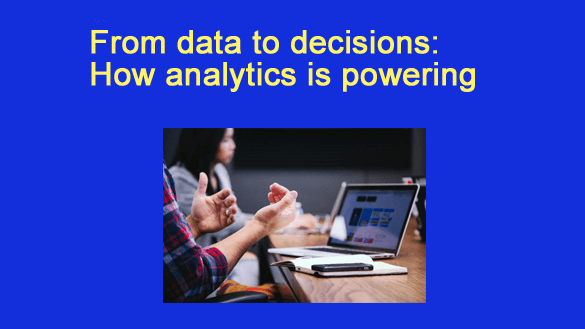
 In today’s rapidly evolving business environment, data has become the cornerstone of decision-making. Organizations across industries are realizing that intuition and experience, while valuable, are no longer sufficient for maintaining a competitive edge.
Data analytics provides a structured way to extract insights, predict outcomes, and guide strategic actions. As businesses strive to innovate, streamline operations, and respond to shifting consumer behaviors, analytics serves as the critical link between raw information and intelligent decision-making.
Data is now viewed not merely as a collection of numbers but as a vital resource that fuels growth and efficiency. Through analytics, companies can uncover hidden patterns, measure performance, and anticipate challenges before they arise. This evolution has redefined how decisions are made, turning enterprises into data-driven ecosystems capable of responding with agility and precision.
The Role of Higher Education in Building Analytics-Driven Leaders
As the demand for data-literate professionals rises, higher education plays a transformative role in preparing the next generation of business leaders. Programs that focus on management and analytics are equipping students with the technical and strategic understanding necessary to lead organizations in the digital era.
Courses in data interpretation, business intelligence, and information systems management form the backbone of this new learning paradigm.
Many professionals are now pursuing an online MBA Information Systems program to bridge the gap between business leadership and technological expertise. These programs integrate managerial decision-making with analytical tools, helping future leaders learn how to translate data into actionable business strategies.
By blending foundational business principles with modern analytical techniques, graduates emerge with the skills to guide companies toward data-informed decisions that drive success.
With flexible online learning options, professionals can gain advanced analytical and leadership training while continuing to work. This flexibility ensures that businesses benefit directly from the upskilling of their workforce, fostering a new generation of leaders capable of harnessing data for competitive advantage.
The University of North Carolina Wilmington’s online programs adhere to the same high standards and personalized instruction as their on-campus counterparts, while offering the flexibility needed to achieve educational goals without disrupting existing careers.
These programs are designed to accommodate the needs of working professionals who aim to expand their leadership potential and technical capabilities simultaneously.
Transforming Data into Business Intelligence
The transformation from raw data to meaningful insight requires a systematic approach. Businesses today collect vast amounts of information through digital interactions, supply chains, and operational systems. Yet, data alone holds little value without analysis. Through analytics, companies convert data into business intelligence that supports evidence-based decisions.
Analytical tools enable organizations to process large volumes of data, identify trends, and understand customer preferences. By doing so, businesses can align their strategies with real-world conditions. For example, predictive models allow companies to anticipate changes in demand, optimize inventory, and enhance customer satisfaction.
Data-Driven Culture: The Heart of Modern Organizations
Developing a data-driven culture is essential for organizations that wish to thrive in the modern marketplace. It begins with leadership that values transparency, collaboration, and informed decision-making. When employees at every level understand the importance of data and are empowered to use it, analytics becomes a shared responsibility rather than a specialized task.
Creating such a culture requires accessible tools, clear communication, and continuous learning. Companies that succeed in this endeavor often find that their teams become more innovative and adaptable.
Enhancing Customer Understanding Through Analytics
Customers are at the center of every successful business, and analytics provides the key to understanding their behaviors, preferences, and expectations. By examining patterns in consumer interactions, businesses can tailor their products, services, and marketing strategies to meet specific needs.
Analytics allows companies to segment their audiences, identify emerging trends, and predict future behaviors. This understanding not only improves customer satisfaction but also strengthens brand loyalty. Businesses can design personalized experiences, ensuring that every interaction aligns with the customer’s journey.
Streamlining Operations with Predictive Insights
Operational efficiency is another area where analytics demonstrates its power. By analyzing internal processes, supply chains, and performance metrics, companies can identify inefficiencies and take proactive measures to address them.
Predictive insights help organizations forecast challenges, manage risks, and allocate resources more effectively.
For instance, in logistics, analytics can optimize routes and reduce delays, while in manufacturing, it can predict equipment maintenance needs to prevent costly downtime. These insights enable businesses to maintain continuity and improve productivity without unnecessary expenditure.
Empowering Strategic Decision-Making
At its core, analytics empowers strategic thinking. Leaders can move beyond reactive decision-making and adopt proactive approaches that anticipate future developments. This shift transforms planning from a speculative exercise into a data-backed process grounded in measurable outcomes.
Analytics helps businesses identify opportunities for growth, evaluate potential investments, and assess performance across departments. Decision-makers gain a comprehensive view of their organization, enabling them to balance short-term goals with long-term vision.
From Insight to Innovation
Analytics is not only about understanding the present but also about shaping the future. When businesses harness data creatively, they open doors to innovation. New products, services, and business models often emerge from the insights generated through analysis.
Data-driven innovation allows companies to anticipate market trends, respond to evolving customer needs, and experiment with fresh ideas. By using analytics to validate concepts and measure outcomes, businesses can innovate confidently while minimizing risks.